The Story of the Eternal Gospel Society
by Daniel J. Schmude, skeptic and founder of the EGS
Table of Contents
Introduction
The Eternal Gospel Society is the result of a skeptic investigating a bizarre incident that happened at one of the two local churches that he was a member of.
Chapter 1 A Hartselle Man Overturns the Altar
The skeptic looks for the reason why the altar was overturned during Mass, and all he can find is that the incident could have been orchestrated by a Divine Father of Jesus.
Chapter 2 The Meaning of the Overturned Altar
If the overturning of the altar was divinely orchestrated as a sign, then its meaning would be that the souls under the altar in the Fifth Seal are those whose lives are currently being given up as an unholy sacrifice.
Chapter 3 The Purpose of the Overturned Altar
If a Divine Father of Jesus orchestrated the overturning of the altar to reveal the victims of a continual human sacrifice, then the purpose of the revelation would be for someone to be taught what Christians can do to help stop the sacrifice.
Chapter 4 New Information About the Gospel is Discovered
The skeptic is taught that Jesus stopped the animal sacrifice by taking away its efficacy and that he took away its efficacy in the year 3790 AM, in fulfilment of the Messianic scriptures.
Chapter 5 The Purpose of the Overturned Altar is Fulfilled
The skeptic is taught that Christians can help stop the unholy sacrifice by signing a petition for the permissive law that will stop coerced abortion.
Chapter 6 The Aftermath of the Fulfilled Purpose
Now that the former skeptic has been taught what Christians can do to help stop the unholy sacrifice, he is commissioned to bring an invitation to the faithful and a more complete Gospel of Christ to the unfaithful. This new evangelism will be the work of the Eternal Gospel Society.
Introduction
The Eternal Gospel Society is the result of a skeptic investigating a bizarre incident that happened at one of the two local churches that he was a member of.
The EGS came about as the result of an investigation into a bizarre incident, which occurred during a Catholic Mass in Decatur, Alabama on October 2, 2005. The incident was the overturning of the altar by a couple of vandals, and the investigator was a skeptic named Daniel.
Since the incident could not have been a rational act, Daniel investigated it to see if it could have been divinely orchestrated as a sign, and if so, what the meaning and purpose of the sign would be.
If there is a meaningful purpose and it is fulfilled, then that would constitute enough evidence for the skeptic to believe in the existence of divine beings and to become the founder of the Eternal Gospel Society.
1. A Hartselle Man Overturns the Altar
The skeptic looks for the reason why the altar was overturned during Mass, and all he can find is that the incident could have been orchestrated by a Divine Father of Jesus.
Daniel J. Schmude is a skeptic, who lived in Decatur, Alabama from 1992-2007. During that time, he was a dual member of two local churches, the Catholic church and the church of Christ. That's because his father had sponsored his Catholic pedobaptism, and his father-in-law had administered his Christian credobaptism.
Since his name means "God is my Judge", Daniel tried to live in a way that would be pleasing to a divine Judge, just in case he truly does exist. That's why the skeptic would attend the Christian worship every Sunday morning, after having attended the Catholic Mass the night before. Since he was always curious about religion, he studied the Bible regularly and he read the 'Religion' section of the Decatur Daily every Saturday morning.
On Saturday morning, October 1, 2005, the Catholic church was featured in the 'Religion' section. The article was about the relics which Daniel's bishop had installed under the altar two years earlier.
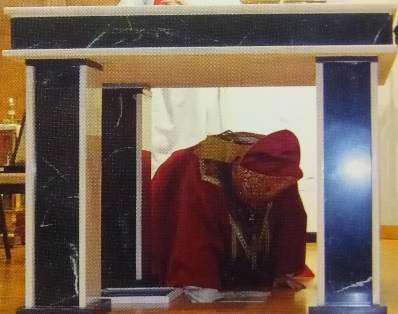
Daniel's bishop installs the relics under the altar at the new sanctuary in 2003.
On Sunday morning, Daniel was heading home from worship when the weirdest thing was about to happen at the 11 AM Mass. The altar was about to be overturned by some vandals, four of whom would be arrested. Daniel didn't find out about it until Sunday night when he saw it on the Channel 48 news. Since he was curious as to why anyone would do such an irrational thing, he planned to read about it in Monday's Decatur Daily.
On Monday, Daniel read that two of the four vandals went up to the altar. They were L. Marie Wagner and A. Joseph Turgeon, who went up to preach about idolatry; but as Marie preached, Joseph suddenly felt the urge to push over the altar, causing it to go down the steps where it smashed into pieces and tore up some carpet. Joseph was Marie's boyfriend and they lived in Hartselle with the other two vandals, a young married couple by the name of E. Beth and V. Eugene Loughman.

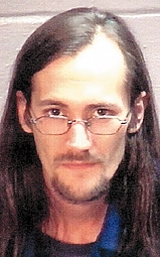
When Marie preached, Joseph felt the urge to overturn the altar.
Daniel was curious about the second names of the vandals; because the second name of the Catholic church is "Annunciation of the Lord," which is the announcement in the alleged vision and dream of Mary and Joseph (Luke 1:26-38, Mat. 1:20-23). It could be that the foursome, Marie, Joseph, Beth, and her husband Eugene, were anti-types of the foursome, Mary, Joseph, Elizabeth, and her well-born husband, the name of whom was not mentioned in the Annunciation of the Lord.
On Tuesday, Daniel read in the Decatur Daily that a "vision" had spurred the attack on the altar. Joseph said that he had a vision where he saw him and Marie "tearing a church apart." He said that wasn't what they did, but he did admit that he "tore up a table" in addition to tearing up some carpet. Since that "table" is the altar, which is the centerpiece of every Catholic sanctuary, his vision turned out to be precognitive.
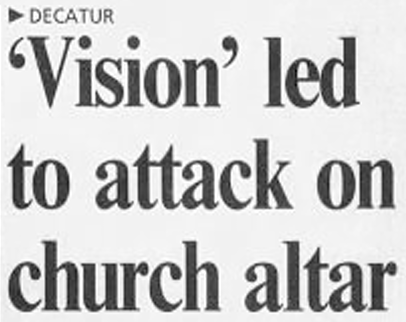
Headline in the Montgomery Advertiser (10/5/2005)
That made Daniel even more curious about the second names. He told his Catholic priest and his Christian pastor about the second names and the vision, but they dismissed it all as a coincidence.
So, Daniel tried to forget about it, and in 2007, he moved to Idaho, where he would live from 2007 to 2012.
But Daniel could not forget about what happened to the altar in Alabama, because he would remember it every time he brought his gift to the altar in Idaho. One day, he went online looking to see if he had missed anything that had been written about the altar incident. He found that he had missed a newspaper article of great significance. It was published in the Huntsville Times on October 16, 2005, exactly two weeks after the incident.
The article said that when Joseph had the vision of him and Marie "tearing up a church," he did not know that Marie had dreamt the same thing a few nights earlier! Her jaw must have dropped in amazement when he told her about his vision. No wonder they acted so irrationally at the Catholic Mass. They were not themselves.
In the story of the Annunciation, Joseph, at the time of his dream, would not have known that Mary had an angelic vision and that she was pregnant by the Holy Spirit. All he would have known was that she was pregnant. After his angelic dream, he likely would have asked Mary who the father of her child was, and her answer would have confirmed his dream. That's how he would have known that his dream was true! Daniel had always wondered about that.


The Annunciation of the Lord was allegedly made by an angel to Mary in a vision and to Joseph in a dream.
The skeptic had begun to think that there is a Divine Father and that he had orchestrated the overturning of the altar in the same way that he had orchestrated the conception of his beloved Son in the womb of a virgin two thousand years earlier. In no way, however, did the overturned altar prove the Divine Father's existence. To obtain proof, Daniel would need to discern the meaning and purpose of the sign, and the meaningful purpose would need to be fulfilled.
2. The Meaning of the Overturned Altar
If the overturning of the altar was divinely orchestrated as a sign, then its meaning would be that the souls under the altar in the Fifth Seal are those whose lives are currently being given up as an unholy sacrifice.
If a Divine Father exists, then he revealed his Anointed Son to a few men some two thousand years ago (Mat. 16:17). Overturning an altar reveals what is under it. To reveal is to make something known, which was previously unknown, usually in a surprising manner. It was already known what was under the altar physically. The relics were. Therefore, the altar would have been overturned to reveal what is under it spiritually in the Fifth Seal (Rev. 6:9).
Since the altar is the place of sacrifice, the souls under the altar in the Fifth Seal would be either those who gave up their lives as a holy sacrifice or those whose lives are given up as an unholy sacrifice; and the catholic Church has always thought that they are those who gave up their lives as a holy sacrifice.
But it is unlikely that a Divine Father would orchestrate the overturning of the altar just to tell Catholics that they have been right all along. Therefore, if he is revealing anything, it must be that the souls under the altar are those whose lives are currently being given up as an unholy sacrifice.
Let's see if that makes sense, by analyzing every word of the Fifth Seal, beginning with Revelation 6:9.
|
Revelation 6:9 (MKJV)
|
|
And when He had opened the fifth seal, I saw under the altar the souls of those who had been slain for the Word of God, and for the testimony which they held.
|
The Lamb (our Lord Jesus) is the one who opened the Fifth Seal, and Daniel is the one who saw the souls under the altar. They were slain for two reasons.
The first is "for the Word of God." This could apply to anyone, because it was through the Word of God that all things, including these souls, came into
being (John 1:1-3).
The second reason is "for the testimony which they held." This also doesn't tell us much. But it's interesting, because the terms
"Word of God" and "testimony" appear four times in the Apocalypse (1:2, 1:9, 6:9, and 20:4), and this is the only time that the testimony is not the
"testimony of Jesus". That's the first clue which suggests that the souls under the altar might not be the baptized martyrs. Now, let's examine the next
verse.
|
Revelation 6:10 (MKJV)
|
|
And they cried with a loud voice, saying, "Until when, Master, holy and true, do You not judge and avenge our blood on those who dwell on the earth?"
|
Notice that the souls under the altar cry out to their "Master," which is despotes in the Greek text, rather than to their "Lord," which would have
been kyrios. In all his inspired writings, this is the only time John wrote despotes. Contrast that to kyrios, which he wrote
seventy-seven times, mostly in reference to our Lord Jesus. This is another clue which suggests that the souls under the altar might not be the baptized martyrs.
The souls under the altar are asking when their blood will be avenged, which is natural; but vengeance is the opposite of what Jesus and Stephen asked for
when they were martyred, which was that their killers be forgiven (Luke 23:34, Acts 7:60). This is a third clue which suggests that the souls under the altar
might not be the baptized martyrs. Now, let's examine the third verse.
|
Revelation 6:11 (MKJV)
|
|
And white robes were given to each one of them. And it was said to them that they should rest yet for a little time, until both their fellow servants and their brothers (those about to be killed as they were) should have their number made complete.
|
Let's consider the white robes. The only other group of souls who have white robes are the saints before the Lamb in Revelation 7:9-17, and they "have washed
their robes and made them white in the blood of the Lamb" (Rev. 7:14). Before they washed their robes, they must have made them dirty by committing personal sin.
Therefore, the saints before the Lamb must have been given their spiritual robes before they were old enough to commit their first personal sin; and since the
souls under the altar were killed before they were given their spiritual robes, they must have been killed before they were old enough to commit their first
personal sin.
|
Do victims of abortion have souls?
|
|
We need to confirm that human fetuses have souls; because if they don't, then the souls under the altar cannot be victims of abortion. It has been said that a fetus does not have a soul until "it takes its first breath." But what is that breath? It is inhaled air, consisting of 21% oxygen. Exhaled air consists of only 16% oxygen since the body has converted the rest of the oxygen into carbon dioxide.
So, we constantly need to replenish the oxygen in our body. When the widow's young son died, there was no longer any "breath" (Heb. neshamah) in him (1Ki. 17:17). That meant there was no longer any oxygen in him. The soul had exited the boy's body, and Elijah prayed that the soul would reenter the boy's body (v. 21). When his prayer was answered, and the soul reentered the boy's body, the boy was revived (v. 22). Breath was in him once again.
As for an embryo, it begins to take in oxygen when it becomes implanted in the womb. From that point, the woman is literally breathing oxygen into her offspring. If we take Genesis 2:7 literally, by saying that Adam became a living soul when oxygen (Heb. neshamah) was first breathed into him, then it follows that an embryo becomes a living soul at implantation, because that's when oxygen is first breathed into the embryo.
Since victims of abortion were implanted in the womb, they are, without a doubt, "souls of those who had been killed" (Rev. 6:9).
|
So, now the skeptic had obtained two of the four pieces of evidence that he needed to prove the Divine Father's existence: the way the altar was overturned, and the meaning of the overturned altar. The two remaining pieces of evidence were the purpose of the overturned altar and the fulfilment of the purpose.
3. The Purpose of the Overturned Altar
If a Divine Father of Jesus orchestrated the overturning of the altar to reveal the victims of a continual human sacrifice, then the purpose of the revelation would be for someone to be taught what Christians can do to help stop the sacrifice.
If a Divine Father exists, then he teaches those who are "teachable of God" (John 6:45). Therefore, the purpose of him revealing the souls of the sacrificial victims under the altar in the Fifth Seal would be so that he could teach someone how Christians can help stop the unholy sacrifice.
Since nobody else was taking the class, Daniel decided to take it. He began praying to the Divine Teacher, just in case he exists, to teach him how Christians can help stop the unholy sacrifice.
Every time the skeptic tried to stop praying, he would bring his gift to the altar and there he would remember that the Divine Teacher, if he exists, had something against him (Mat. 5:23), namely, that Daniel had no excuse for trying to drop the class, because he had graduated from a prestigious university with a 4.0 GPA in a challenging field of study. So, the skeptic would resume praying, asking to be taught how Christians can help stop the unholy sacrifice.
Daniel was taught what a sacrifice is. A sacrifice is an act of giving up something to obtain something else for oneself or for others. That was how the Collins Dictionary was defining it. For example, on every Day of Atonement, the life of a goat was given up, or sacrificed, at the temple to obtain for the people, atonement for their sins.
|
Definition of Sacrifice
|
|
An act of giving up something to obtain something else for oneself or for others.
|
|
Revelation 6:11 (MKJV)
|
|
And white robes were given to each one of them. And it was said to them that they should rest yet for a little time, until both their fellow servants and their brothers (those about to be killed as they were) should have their number made complete.
|
Next, Daniel was taught how a sacrifice is stopped. A sacrifice is stopped by taking away its efficacy, that is, by taking away its power to obtain something for at least one person. For example, the animal sacrifice was stopped, not by destroying the temple in AD 70, but by taking away the efficacy of the sacrifice some 37 to 41 years earlier, when the Messiah allegedly died for our sins.
But because he is a skeptic, Daniel needed to see evidence before he could believe that Jesus, by dying, took away the efficacy of the animal sacrifice.
4. New Information About the Gospel is Discovered
The skeptic is taught that Jesus stopped the animal sacrifice by taking away its efficacy and that he took away its efficacy in the year 3790 AM, in fulfilment of the Messianic scriptures.
A. How to Validate the Testimonies of Two Witnesses
The story of Susanna is recorded in Daniel chapter 13 of the Catholic Bible. The story illustrates how we go about validating the testimonies of two individuals who claim to have seen a certain event. First, we separate the two witnesses, so that neither can hear how the other will answer the question that we are about to ask them. Then, we ask each witness a question about the alleged event, a question with many possible answers. If their answers match, then we have
validated their witness. But if their answers differ, then we have
invalidated their witness. In our case, we will ask each witness a question posthumously. This is possible, because their testimonies are recorded, and as we know from watching the game show "Jeopardy," each recorded statement is an answer to a question.
B. Validating the Testimonies of Two Prophets
Two prophets claim to have foreseen a future event, the kingdom of Judah committing a great sin. Only one witness answers the question, "What will the great sin of Judah be?" But both witnesses answer the question, "When will Judah commit its great sin?" The latter is the question that we will ask each prophet posthumously, and each could not have known the answer of the other because of how they answered the question. One answered in number of years after a reference point, and the other, in number of years before a reference point (ie. x years after event W versus y years before event Z). Therefore, this is a perfect way to validate their testimonies (ie. if W + x = Z - y, then their answers match). The two prophets are Ezekiel and Daniel.
About 3 years before the destruction of the first temple, Ezekiel prophesied that Judah would commit its great sin 40 years before the destruction of the second temple. We can know this, because he prophesied by building a clay model of the first temple's impending destruction (Eze. 4:4-6), and it was not until after he had laid on his left side for parts of 390 days, one for each year of Israel's iniquity, that he laid on his right side for parts of 40 days, one for each year of Judah's iniquity. Therefore, the 390 years and the 40 years cannot overlap; and because of that, the 390 years must have led up to the destruction of the first temple (see Table 1), while the 40 years must have been foretold to lead up to the destruction of a second temple.
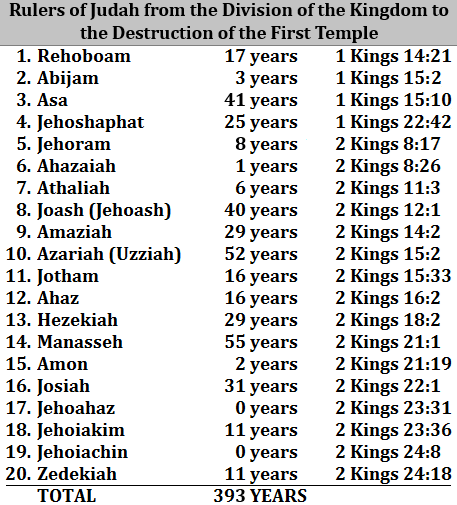
Table 1 - The first temple was destroyed 393 years after the kingdom became divided.
Jeroboam, the first ruler of Israel, is the one who caused Israel to sin (1Ki. 14:16). Therefore, the 390 years of Israel's iniquity began when the kingdom became divided between Israel (led by Jeroboam) and Judah (led by Rehoboam). If we add up the reigns of all 20 rulers of Judah between the division of the kingdom and the destruction of the first temple, the sum is 393 years. 390 of those would have passed at about the time Ezekiel prophesied the impending siege of Jerusalem. The first temple was destroyed 3 years after Ezekiel prophesied, and he prophesied 390 years after Jeroboam caused Israel to sin. 3 is 0.77% of 390 (since 3 / 390 = 0.0077). Therefore, 0.77% is Ezekiel's fudge factor.
As for the second temple, it was destroyed on the 9th of Av in the year 3830 AM (see Figure 1). 40 years before that was the year 3790 AM. If we apply Ezekiel's fudge factor, then we take 0.77% of 40 years, which is 112 or 113 days (since 0.0077 x 40 x 365.25 = 112.5), and we subtract that from the 9th of Av to arrive at the 14th or 15th of Nisan (since 112 or 113 days is 5 or 6 days less than 4 lunar months of 29.5 days each). Therefore, according to Ezekiel's prophecy, Judah would commit its great sin in the year 3790 AM, most likely on the 14th or 15th of Nisan.
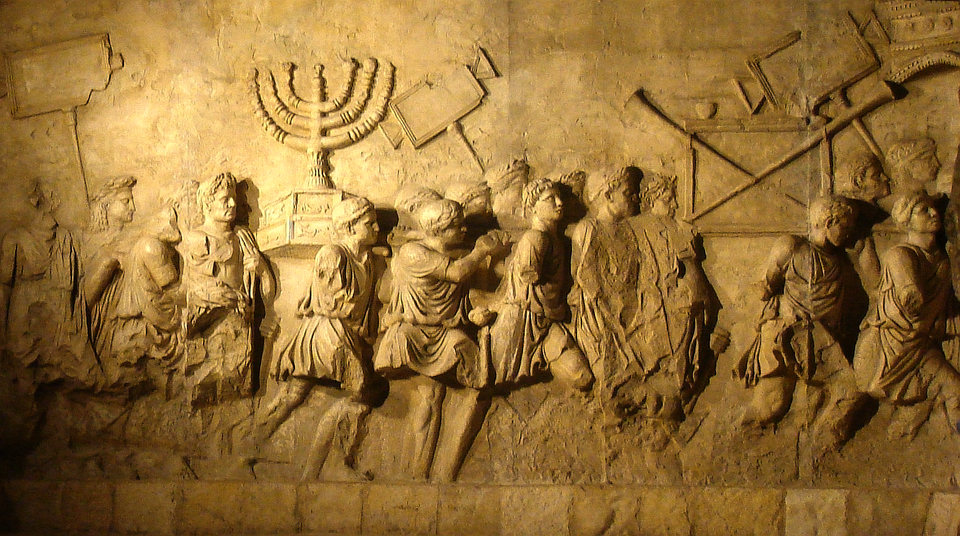
Figure 1 - Relief on the Arch of Titus, depicting the scene of the second temple's destruction on the 9th of Av in the year 3830 AM.
The angel Gabriel told the prophet Daniel what Judah's great sin was going to be. They were going to execute the Messiah (Dan. 9:26). Isaiah was told the same thing (Isa. 53:1-12). But like Ezekiel, Daniel was also told when Judah's great sin was going to be. However, instead of answering the question "when?" in number of years before an event, such as the destruction of the second temple, Daniel answered it in number of years after an event, namely, the "going forth of the commandment to restore and to rebuild Jerusalem" (Dan. 9:25). Artaxerxes gave both parts of the two-part commandment. He gave the restore part to Ezra in the 7th year of his reign (Ezr. 7:7) and the rebuild part to Nehemiah in the 20th year of his reign (Neh. 2:1).
70 heptades were determined for Daniel's people (Dan. 9:24), and to determine when the 70 heptades began, it is necessary to determine which year was the 7th year of Artaxerxes (the going forth of the restore part of Artaxerxes' two-part commandment). His predecessor was Xerxes, who was assassinated in August of 465 BC, which would have been very late in the year 3296 AM. According to Papyrii AP6, Artaxerxes did not ascend to the throne until the year 3297 AM. Therefore, that was his accession year, and 3304 AM was his 7th year. If 3304 AM is the first year of the 1st heptade, then 3787 AM is the first year of the 70th heptade (since 3304 + [70 - 1] x 7 = 3787).
Judah is foretold to execute the Messiah after 69 heptades (Dan. 9:26). The next verse tells us how long after the 69 heptades. It says that he will confirm a covenant with many for one heptade (the 70th heptade), and in the middle of the heptade (the 4th year of it), he will cause sacrifice and oblation to cease (Dan. 9:27). His death by unjust execution is what would cause sacrifice to cease, and it would occur in the year 3790 AM (since 3304 + [69 x 7] + [4 - 1] = 3790). That fulfilment of Daniel's prophecy is confirmed by the miracle which happened at the second temple on its last 40 feasts of atonement (see Figure 2).
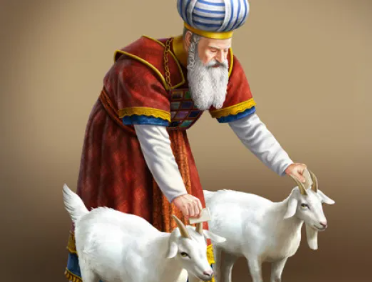
Figure 2 - The lot for the Lord came up in the left hand 40 feasts in a row, from 3791 to 3830 AM.
According to the Talmud, for 40 straight years (from 3791 to 3830 AM), the lot for the Lord came up in the left hand and the red strap remained red. The lot for the Lord coming up in the left hand 40 times in a row is like a coin flip landing on tails 40 times in a row. The odds of that are about a trillion to one! That miracle was a sign that the efficacy of the sacrifice was taken away in 3790 AM, sometime before the 9th of Av.
In summary, we asked two prophets posthumously, "When was Judah going to commit its great sin?" Ezekiel answered that Judah would commit its great sin 40 years before the destruction of the second temple, and Daniel answered that Judah would commit its great sin 486 years after the seventh year of Artazerxes (since [69 x 7] + [4 - 1] = 486). 40 years before the destruction of the second temple turned out to be the year 3790 AM, and 486 years after the seventh year of Artazerxes also turned out to be the year 3790 AM. Since the answers match, the testimonies of the two prophets are validated. Therefore, the scriptures foretold that Judah would kill the Messiah in the year 3790 AM.
C. Validating the Testimonies of Two Apostles
Two apostles claim to have witnessed Judah killing Jesus of Nazareth during the reign of Herod (from 3786 to 3796 AM). Each testimony answers the question, "On what day of the week was Jesus killed?" Each testimony also answers the question, "On what day of the month was Jesus killed?" Those are the two questions that we will ask each apostle posthumously, and since each witness answers the two questions in a very different manner, this is a perfect way to validate their testimonies. The two apostles are Matthew and John.
Knowing the day of the week and the day of the month that Jesus of Nazareth died will help us determine the year of his death. The following is how we establish the five possible years in which he could have died, according to Luke and John. John the Baptist was about six months older than Jesus (Luke 1:36). A Jewish man would begin his ministry at about the age of 30 (Luke 3:23). John began his ministry in the 15th year of Tiberius Caesar (Luke 3:1). Tiberius was a co-emperor with Augustus for 2 years (see Figure 3). Therefore, the 15th year of Tiberius' reign was either 26 or 28 CE, depending on whether we count the 2-year co-regency. Assuming the ministry of John began about 6 months before that of Jesus, the first Passover of Jesus' ministry happened as early as 27 CE and as late as 30 CE.
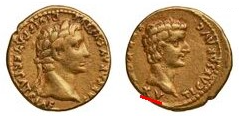
Figure 3 - Roman coin depicting the co-emperors from 12 to 14 AD, Tiberius on one side and Augustus on the other.
According to John the Apostle, Jesus died on the 3rd or 4th Passover of his ministry, depending on whether the unnamed feast (John 5:1) was the Passover. (The 3 named feasts are mentioned in John 2:13, 6:4, and 13:1). When we do the math, we find that the year of Jesus' last Passover, the one on which he died, was as early as 29 CE and as late as 33 CE, with 30, 31, and 32 CE being three other possible years. Therefore, according to Luke and John, Jesus died on the Passover in one of the five years, from 29 to 33 CE, which is from 3789 AM to 3793 AM.
According to Matthew, Jesus said that the Son of Man would be in the heart of the earth (i.e. dead) for "3 days and 3 nights" (Mat. 12:39-40). He also claims that Jesus rose from the dead during the 1st night of the week, just before daybreak (Mat. 28:1-8). Jesus died on a day of preparation, because Matthew calls the next day, "the day after the preparation" (Mat. 27:62). In a moment, it will become evident why he did not simply call that day the sabbath. Finally, it was on the day after Jesus' death that the chief priests and Pharisees asked Pilate to station a guard at the tomb "until the 3rd day", since Jesus had said that he would rise from the dead "after 3 days" (Mat. 27:63-64). The guard could leave the tomb on "the 3rd day" of guard duty, because that would have been the 4th day of Jesus' death (see Figure 4).
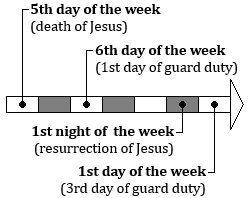
Figure 4 - Matthew's timeline of events leading up to the resurrection of Jesus.
Some have said that Matthew has the last supper occurring at the same time the Passover lambs at the temple were eaten (Deu. 16), which would have been early on the 15th of Nisan. But that is not possible, because the 15th of Nisan is an annual sabbath (Deu. 23:6-7) and Matthew has Jesus being crucified on a day of preparation (Mat. 27:62). Therefore, the last supper must have occurred early on the 14th of Nisan, which is when the Passover lambs during the Exodus were eaten (Exodus 12). According to Matthew's timeline, Jesus of Nazareth died on the 5th day of the week and the 14th day of Nisan before rising from the dead on the 1st night of the week, just before daybreak on the 17th day of Nisan. The Son of Man was dead for parts of 3 days and 3 nights.
According to John, Jesus said that there are twelve hours in a day (John 11:9) and that if his body was destroyed he would raise it up "in three days" (John 2:19).
John also claims that Jesus rose from the dead just before the 1st day of the week while it was still dark (John 20:1).
Therefore, Jesus could have died as early as the 5th day of the previous week and as late as the 7th day.
The 7th day can be ruled out by the fact that it is the weekly sabbath and John claims Jesus was crucified on a day of preparation (John 19:14), a day that precedes a Sabbath.
That leaves the 5th and 6th days of the week as the only two possibilities.
John claims that Jesus died on the Passover, the 14th of Nisan (Lev. 23:5); and the Passover is always a day of preparation, since it always precedes an annual sabbath, the 15th of Nisan, known as the first day of the Feast of Unleavened Bread (Lev. 23:6-7).
Therefore, the 5th day of the week remains a possible day of Jesus' death, as does the 6th day (see Figure 5).
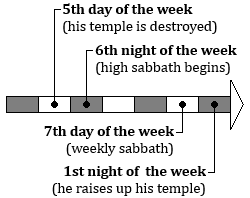
Figure 5 - John's timeline of days leading up to the resurrection of Jesus.
But regarding the need to take the body of Jesus down from the Cross, John writes,
"The Jews therefore, because it was the preparation, that the bodies should not remain upon the cross on the sabbath day, (for that sabbath day was an high day,) besought Pilate that their legs might be broken, and that they might be taken away" (John 19:31).
Notice the "for" clause. A for-clause explains why something in the statement is true. But this for-clause does not explain why "the bodies should not remain upon the cross." Instead, it explains why "it was the preparation." It was the preparation, because "that sabbath day was an high day."
There is no reason for John to write, "for that sabbath day was an high day," unless that sabbath day was not the 7th day of the week but the 6th day.
Therefore, according to John, Jesus of Nazareth was killed on the 5th day of the week and the 14th day of Nisan.
Modern science enables us to accurately calculate the moon phases of ancient Jerusalem, so that we can determine whether any of the five years in which Jesus could have died (from 3789 to 3893 AM) had the 14th of Nisan fall on the 5th day of the week. Nisan is the first month on the religious calendar, and they knew, based on whether the barley sheaf had appeared, whether to add a leap month. The first full moon after the Spring Equinox is the Nisan moon. Half of a month is almost 15 days, and the Spring Equinox usually occurs on March 20. Therefore, we are interested in the new moon phases between March 5 and April 4 for the five years in question (see Table 2). The 1st of Nisan is the calendar day in which the first crescent of the Nisan moon becomes visible.
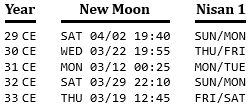
Table 2 - Dating the 1st of Nisan in years 29 to 33 CE (3789 to 3793 AM). The leap month would have been added in 32 AD.
The first crescent becomes visible around the time of the sunset, about 18 to 46 hours after the time of the new moon. If it first becomes visible about 18 to 32 hours after the time of the new moon, then it becomes visible after sunset (because it's too close to the sun to see it before sunset). Otherwise, the first crescent becomes visible before sunset. According to the moon phase data, in 30 CE, the first crescent of the Nisan moon became visible either after the sunset on a Thursday or before the sunset on a Friday. Either way, the 6th day of the week was the 1st day of Nisan, and the 14th day of Nisan was on the 5th day of the week. 30 CE (3790 AM) is the only year, of the five, in which the 14th day of Nisan fell on the 5th day of the week.
Therefore, according to the testimonies of Matthew and John, coupled with modern science, Judah executed Jesus in the year 3790 AM, the same year that Ezekiel and Daniel foretell as the year when Judah would execute the Messiah. Even the day of Jesus' death (the 14th of Nisan) matches what we estimated based on Ezekiel's fudge factor.
In summary, we asked two apostles posthumously, "On what day of the week was Jesus killed?" and "On what day of the month was Jesus killed?" The two apostles were Matthew and John, and both answered that Jesus was killed on the 5th day of the week and the 14th day of Nisan.
Since neither of them recorded which year of Herod's reign was the year in which Jesus was killed, we had to wait almost two thousand years, when modern science enabled the moon phases of ancient Jerusalem to be computed, before we could find out the year that Judah killed Jesus of Nazareth, according to the apostles.
That year turned out to be the year 3790 AM, the same year in which the two prophets, Ezekiel and Daniel, foretold that Judah would kill the Messiah.
This validates the Gospel of the Messiah, which claims that "the Christ died for our sins according to the scriptures" (1Co. 15:3) and that "he rose from the dead on the third day according to the scriptures" (1Co. 15:4).
This new validation enables us to insert the phrase, "in the year 3790 AM," into the first part of the Gospel, so that new evangelists can say, "the Christ died for our sins in the year 3790 AM according to the scriptures."
5. The Purpose of the Overturned Altar is Fulfilled
The skeptic is taught that Christians can help stop the unholy sacrifice by signing a petition for the permissive law that will stop coerced abortion.
Now that the skeptic was thoroughly convinced that a sacrifice truly is stopped by taking away its efficacy (i.e. its power to obtain something for at least one person), Daniel just needed to be taught what an unholy sacrifice is. It is the opposite of a holy sacrifice.
|
What a Holy Sacrifice Is
|
|
A holy sacrifice is the act of giving up one's own life to obtain something else for others.
|
|
What an Unholy Sacrifice Is
|
|
An unholy sacrifice is the act of giving up the life of someone to obtain something else for someone else.
|
In the time of the early church, many disciples of Christ gave up their lives as a holy sacrifice to obtain faith for people on earth. Billions of people on earth have come to faith in Jesus Christ, because his disciples in the early church chose to give up their lives rather than to deny him before men.
Today, the lives of many are being given up as an unholy sacrifice. In each unholy sacrifice, the life of a young human offspring is given up, usually in the womb, to obtain for its father the forgiveness of his debt of sustenance to his offspring.
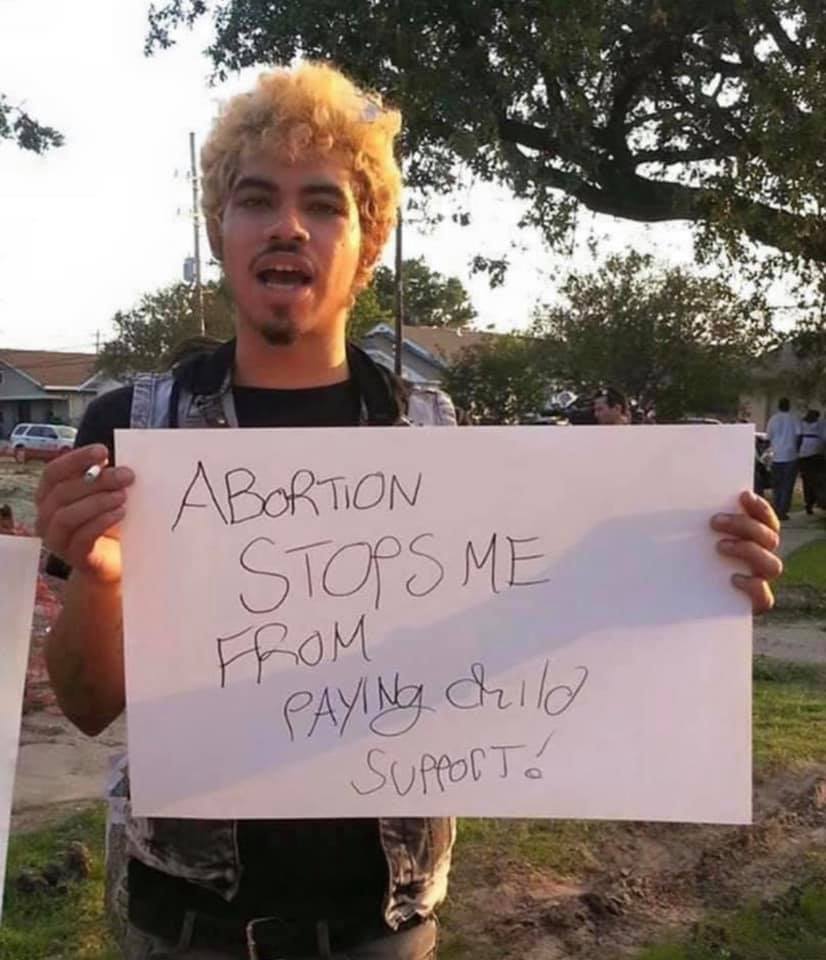
Giving up the life of a man's offspring in the womb obtains for him the forgiveness of his debt of sustenance to his offspring.
The way to help stop the unholy sacrifice is to let every pregnant female certify the debt of sustenance, which is owed to her offspring, so that if anybody was to kill the creditor in her womb, the debt would not be forgiven but would instead be converted into reimbursement for wrongful death, payable to the parents or guardians of children in need, whom she could either list on the certificate or let the state determine.
A bill of law, which would "let every pregnant female certify the debt of sustenance," could be drafted as either an obligatory bill, one that would require her to certify the debt, or a permissive bill, one that would give her the option to certify the debt. Today, the bill would have to be permissive. so that it could gain the majority support that a bill needs to become law.
Also, the permissive bill must not state that its purpose is to empower women to "take away the efficacy" of the unholy sacrifice, because, sadly, most people don't care about the young victims of the unholy sacrifice. To gain majority support, the bill must state that its purpose is to empower women to "take away the incentive" for coerced abortion. (The efficacy of the unholy sacrifice is the same as the incentive for coerced abortion, that being the forgiveness of the debt of sustenance.)
Finally, the permissive bill needs to point out the fact that a woman's "right to choose life" (i.e. her right to remain pregnant) is not being adequately protected at the present time. That way, nobody will have any excuse to oppose the bipartisan bill. Ignorance will be the only thing preventing the permissive bill from being introduced and passed into law.
|
Short Description of the Right to Choose Life Act
|
|
The RTCL Act would give every pregnant female an option that she could safely exercise to take away the incentive for coerced abortion. Her option would be to certify the debt of sustenance, which is owed to her offspring, so that if anybody was to kill the creditor in her womb, the debt would not be forgiven but would instead be converted into reimbursement for wrongful death, payable to the parents or guardians of children in need, whom she could either list on the certificate or let the state determine.
|
The reason why she could "safely" exercise the option is because she is now able, thanks to advancements in DNA forensics, to submit proof of paternity long before she begins to show. It's only when she begins to show that she must tell her boyfriend and her parents that she is pregnant. Those are the only ones who would have had an incentive to coerce her to get an abortion if she had not exercised the option. Because she exercised the option, they would have nothing to gain by making her get an abortion.
To see our latest draft of the Right to Choose Life Act, please click this link: A Draft of the Right to Choose Life Act. As stated earlier, ignorance is preventing the permissive bill from being introduced and passed into law. To overcome the ignorance, it is necessary for the skeptic to start a new evangelism.
6. The Aftermath of the Fulfilled Purpose
Now that the skeptic has been taught what Christians can do to help stop the unholy sacrifice, he is commissioned to bring an invitation to the faithful and a more detailed Gospel of Christ to the unfaithful. This new evangelism will be the work of the Eternal Gospel Society.
Now that he was no longer a skeptic regarding the virgin birth or resurrection of Jesus, Daniel was commissioned to start the Eternal Gospel Society. All one must do to be a member of the EGS is to be baptized and to sign the petition for the Right to Choose Life Act. To be an active member, one must become a new evangelist, someone who brings a new message of invitation to every baptized believer and a re-proposed Gospel of Christ to every unbeliever.
The new message is an invitation to help stop the unholy sacrifice by signing the petition. Each new evangelist will bring the new message of invitation to the leadership of randomly selected church each week. Because it's human nature to ignore a fantastic claim instead of investigating it, an RSVP date must be placed on the invitation.
If the RSVP date passes and leadership has either ignored or declined the invitation without a good reason, then they will have merited a church protest where large graphic images of sacrificial vistims will be on display outside their place of worship on the Lord's Day. The merely possibility of a church protest should encourage leadership to examine the claim and verify that it is true.
A new evangelism is what Pope John Paul II expressed the need for in 1990, the year of John's credobaptism. JPII did not try to define exactly how the new evangelism would look like. That part was the Divine Father's job, and now he has done the job through a skeptic of all people.